
Dust Accumulation vs. Blown Speaker — How to Tell the Difference and What to Do
Phone speaker sound awful? Here's how to tell if it's just clogged with pocket lint (free 60-second fix) or if the speaker is actually blown (needs repair).
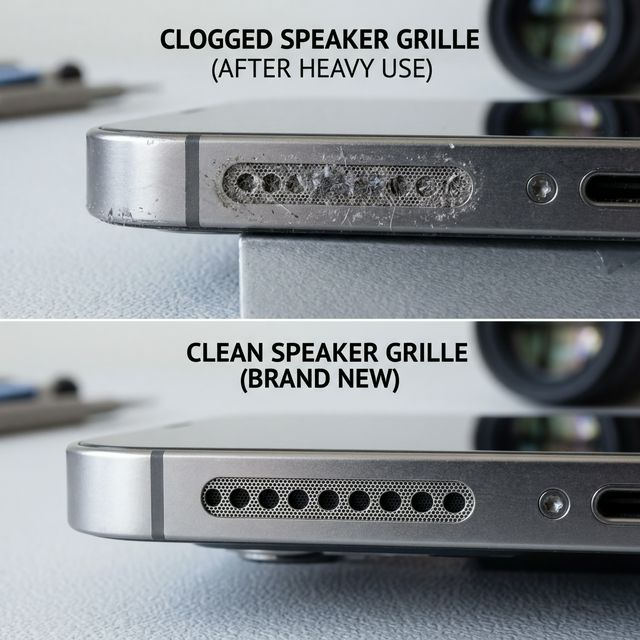
When your phone sounds degraded, there are two very different things that could be happening: temporary dust and lint obstruction in the speaker grille (a 60-second free fix) or actual torn or blown speaker components (needs professional repair). Knowing which one you’re dealing with determines whether you need a free acoustic tool or a pricey repair appointment.
Here’s how to diagnose the problem accurately.
The Quick Diagnostic Test
Before anything else, try this 30-second test:
- Play any audio (music, YouTube, podcast) at 50% volume
- Listen carefully to the quality of the sound
- Then run Speaker Cleaner’s acoustic cleaning mode for 30 seconds
- Play the same audio again
If sound quality improves noticeably → You had dust/lint in the grille. The problem is solved or needs one more cycle.
If sound quality doesn’t change at all, or sounds crackly even at low volumes → Read on for deeper diagnosis.
Signs of Dust in the Speaker Grille (Fixable)
Dust and lint trapped in the speaker grille produces a very specific set of symptoms:
| Symptom | What It Means |
|---|---|
| Sound is muffled but stable | Lint is partially blocking sound waves |
| High frequencies missing, bass dominant | Dust blanket acts as a low-pass filter |
| Volume seems 40-60% lower than normal | Compaction absorbs acoustic energy |
| You can literally see gray fuzz in the grille | Visual confirmation of pocket lint |
| Phone is >6 months old without cleaning | Natural accumulation over time |
All of these are consistent with simple grille obstruction. The acoustic cleaning method (165–230 Hz tone, speaker facing down, 30–60 seconds) paired with a dry brush resolves this in the vast majority of cases.
Signs of an Actually Blown Speaker (Needs Repair)
True speaker hardware damage produces entirely different, much harsher symptoms:
| Symptom | What It Means |
|---|---|
| Terrifying crackling or popping noises | Torn diaphragm flapping around |
| Audio distorts heavily at low volumes | Voice coil rubbing or disconnected |
| Zero sound output at all | Complete component failure or severed wire |
| Sharp ringing distortion on certain notes | Physical damage to the speaker cone |
| Started immediately after max volume drop | Mechanical trauma to the speaker |
These symptoms indicate the speaker component itself is physically broken and likely needs a replacement from a repair shop.
How Speakers Actually Blow Out
Unlike dust buildup which takes months, speaker blowouts usually happen instantly due to:
- Extreme Volume Spikes — Playing audio far louder than the tiny drivers can handle can tear the flexible membrane.
- Moisture Corrosion — Water ingress can rust the copper coils over weeks, causing eventual failure.
- Physical Punctures — The number one cause of broken speakers is people poking needles, toothpicks, or safety pins into the grille to “clean” it, puncturing the diaphragm.
- Compressed Air — Spraying a can of compressed air straight into the grille will instantly rupture the delicate speaker cone.
The Cost of Professional Repair
If you perform the acoustic tests and conclude your speaker is genuinely blown, you will need to seek an authorized repair center.
Repair cost benchmarks:
| Repair | Typical Cost | Time |
|---|---|---|
| Speaker replacement (third-party local shop) | $30–$80 | 30–60 minutes |
| Speaker replacement (Apple/Samsung authorized) | $70–$150 | 1–3 business days |
For simple grille-trapped dust and pocket lint — which accounts for the vast majority of “my phone sounds muffled” complaints — Speaker Cleaner’s free acoustic playback tool is the fastest and safest solution available.