
Does Speaker Cleaner Actually Work? What the Science Says
Does Speaker Cleaner work? Yes — 165-230 Hz speaker cleaner sounds can push water from speaker grilles, and the method is safe for normal phone speakers.
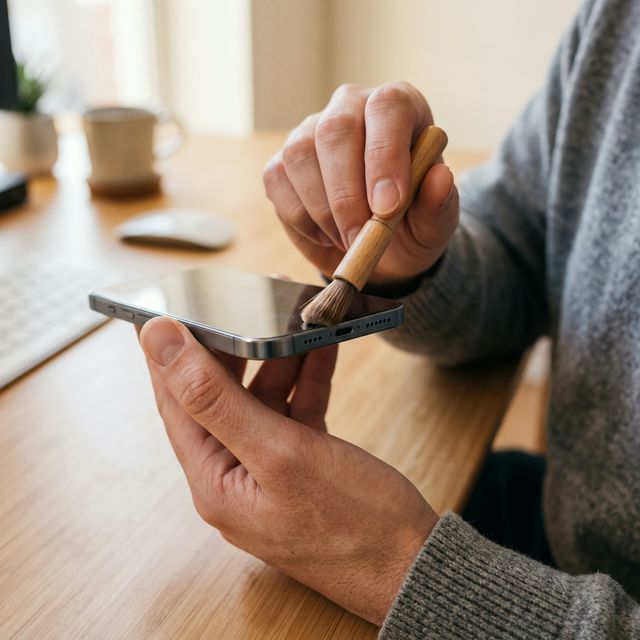
Yes, speaker cleaner sounds work for removing water trapped in phone speaker grilles. If you’re asking does Speaker Cleaner work, does a speaker cleaner app work, or do speaker cleaner sounds work, the short answer is yes for water trapped in the grille. The method uses low-frequency acoustic pressure waves (165–230 Hz) to physically push water droplets out of microscopic speaker openings. This isn’t a marketing gimmick — it’s the same acoustic principle that Apple uses in the Apple Watch’s built-in Water Lock feature.
If you need to get water out of your phone speaker, there are important caveats: speaker cleaning sounds only work for water trapped in the grille, not for internal water damage, corrosion, or hardware failure. If you’re wondering whether a speaker cleaner app is safe, the key point is that these frequencies stay within the speaker’s normal operating range. Here’s exactly what the science supports and what it doesn’t.
The Physics Behind Speaker Cleaning Sounds
To understand why speaker cleaner sounds work, you need to understand what’s happening inside your phone’s speaker:
- Your speaker has a diaphragm — a thin membrane that vibrates to produce sound waves
- The speaker grille — a protective mesh with holes between 0.1 mm and 0.3 mm in diameter — sits in front of the diaphragm
- When water enters the grille, surface tension holds it in the tiny holes, creating a liquid barrier
When a low-frequency tone plays, the diaphragm moves back and forth with significant displacement. At 165 Hz, the diaphragm’s peak-to-peak displacement is several times larger than at higher frequencies. This large physical movement creates pressure pulses strong enough to overcome the surface tension holding water in the grille openings.
This is documented acoustic physics. The relationship between frequency, displacement, and acoustic pressure is described by the Euler equation for sound wave propagation. Lower frequencies = larger diaphragm displacement = stronger water ejection force.
Why 165–230 Hz Specifically?
This frequency range is optimal for three reasons:
- Below 165 Hz, most phone speakers can’t produce sufficient sound pressure levels — the tiny drivers simply can’t move enough air
- Above 230 Hz, the diaphragm displacement decreases significantly, reducing the mechanical force available to push water out
- 165–230 Hz sits in the sweet spot where phone speakers produce maximum physical displacement while still operating within safe limits
Apple’s Apple Watch water ejection feature uses a similar frequency. The shortcut community has identified the tone as approximately 165 Hz — exactly in this range.
What Speaker Cleaner Can Fix
✅ These Problems Are Fixable
- Muffled sound after rain exposure — Water in the grille. Acoustic method works in 90%+ of cases.
- Tinny, distorted audio after a splash — Same cause. Usually resolves in 30–60 seconds.
- One speaker sounds quieter than the other — Often because only one grille got wet.
- Speaker sounds “underwater” — Classic sign of water in the grille acting as a sound filter.
- Crackling or popping sounds — Can indicate water partially blocking the diaphragm’s movement.
❌ These Problems Need Professional Repair
- No sound at all from the speaker — Possible voice coil failure or severed connection.
- Persistent distortion after multiple cleaning cycles — May indicate corrosion on the speaker contacts.
- Phone was submerged for more than 30 minutes — Internal water damage is likely beyond the speaker grille.
- Visible corrosion (green or white residue) — Chemical damage to speaker components.
Does Rice Work Better?
No. Rice is a myth for speaker water removal. A widely cited 2014 study by Gazelle, a consumer electronics trade-in company, tested multiple drying methods and found that uncooked rice was the slowest — even slower than leaving the phone in open air.
Rice works by passive absorption: it slowly draws moisture from the surrounding air. But water trapped in a speaker grille is held by surface tension, not by ambient humidity. You need active mechanical force to dislodge it — which is exactly what acoustic pressure waves provide.
A direct comparison:
| Method | Mechanism | Time to Clear Speaker Grille | Risk |
|---|---|---|---|
| Speaker cleaner sound | Active pressure ejection | 30–60 seconds | None |
| Shaking phone | Gravity/centrifugal force | Variable, often incomplete | Low |
| Rice bag | Passive moisture absorption | 24–48 hours (often fails) | Starch dust in ports |
| Hair dryer | Heat evaporation | Minutes, but risky | High — can damage components |
| Compressed air | Forced air pressure | Quick, but pushes water deeper | Medium — water forced inward |
How to Get the Best Results
For optimal water ejection using speaker cleaner sounds:
- Speaker facing down — Let gravity help
- Maximum volume — More volume = more diaphragm displacement = more ejection force
- Run for at least 30 seconds — The frequency sweep needs time to work through the full range
- Blot after each cycle — Wipe ejected water from the exterior before it re-enters the grille
- Repeat if needed — Stubborn cases may take 2–3 cycles
The Bottom Line
Speaker cleaner sounds are a legitimate, physics-backed method for removing water from phone speaker grilles. They work because of acoustic pressure wave displacement — the same principle Apple uses in its own hardware. They don’t work for deep internal water damage, corrosion, or hardware faults. For grille-trapped water, which accounts for the vast majority of ‘my phone got wet and speakers sound weird’ cases, they’re the fastest and safest solution available.